
Half a Supermarket’s Electricity Bill Goes to Refrigeration – That’s Why Europe Is Replacing Every Cooler in Sight
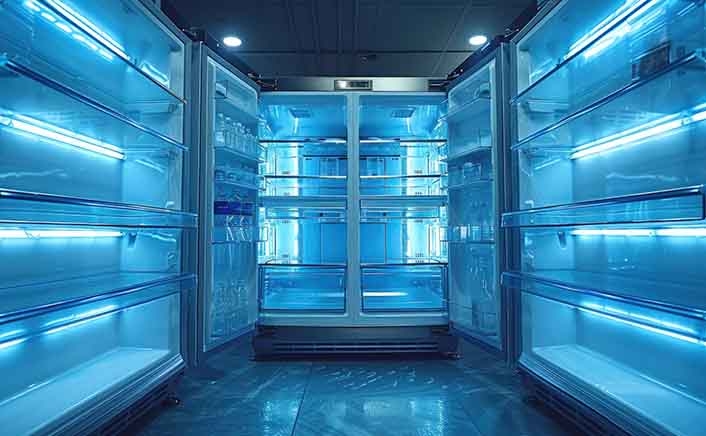
Pune, India — Few retailers realize just how much of their electricity bill goes to keeping food cold — refrigeration alone can account for up to 50% of a supermarket’s total power consumption. That single fact is driving one of the more understated modernization waves in European retail: the Europe Refrigeration Coolers Market recorded 1.95 million units sold in 2025 and is projected to reach 2.81 million units by 2033, translating into USD 9.06 billion in market value at a CAGR of 5.5% between 2027 and 2033.
Access the Full Report Here: https://marksparksolutions.com/reports/europe-refrigeration-coolers-market
Replacement, Not Expansion, Is Driving This Market
What’s notable here is that this growth isn’t primarily about more stores opening; it’s about existing stores replacing equipment that’s simply outlived its usefulness. Food retailers across Europe are swapping out open-display cabinets, multideck coolers, and plug-in units that have often been in service for over a decade, and the motivation is straightforward: lower electricity consumption, better temperature consistency, and compliance with tightening environmental regulation.
Modern replacement units bring variable-speed compressors, electronically commutated fans, LED lighting, and smart energy management controls features that meaningfully reduce operating costs compared to legacy equipment. Just as important, many new systems run on natural refrigerants like CO2 (R744) and R290, which help retailers comply with the EU’s revised F-Gas Regulation while substantially reducing the global warming potential of their refrigeration footprint.
Smarter Cooling Means Less Waste, Not Just Lower Bills
Beyond energy savings, closed-door display cabinets and smart refrigeration technology are giving operators tighter temperature control, which translates directly into less food spoilage and longer shelf life a benefit that compounds with digital monitoring platforms now enabling real-time temperature tracking, predictive maintenance, and remote diagnostics. Retailers get fewer surprise breakdowns and easier food safety compliance in the same upgrade.
Store design is evolving alongside the technology. Retailers are increasingly building refrigerated displays that look better and merchandise more effectively. Improved airflow and product visibility aren’t just aesthetic choices; they measurably affect sales conversion at the shelf.
Download Free Sample Report Here: https://marksparksolutions.com/sample-reports?1015&Download_Free_Sample
Which Size Cooler Actually Wins Right Now
Capacity segmentation tells an interesting story about where demand concentrates. The 500–1,000 liter segment leads with 34.7% share, favored by supermarkets, convenience stores, restaurants, and institutional kitchens for its balance of storage capacity and floor space efficiency. The 1,001–2,000 liter segment holds 28.9%, serving supermarkets and food processing facilities that need larger volumes with precise temperature control and increasingly using natural refrigerants to stay ahead of regulation rather than scrambling to comply later.
Smaller Below-500-liter units hold 18.6% share, driven by cafés, pharmacies, and small foodservice operators where compact footprint and fast installation matter more than raw capacity. Above-2,000-liter systems represent 17.8% of the market fewer units sold, but meaningfully higher revenue per installation given their cooling capacity and configuration complexity, particularly for hypermarkets and pharmaceutical logistics.
Germany Leads, But the Whole Region Is Upgrading
Germany commands the largest national share at 24.5%, backed by an extensive supermarket network and strong domestic refrigeration manufacturing base, with businesses actively replacing legacy equipment with natural-refrigerant systems across retail and industrial sectors alike. France follows at 15.4%, driven by widespread refrigerated display use in hypermarkets and premium food retail, alongside growing pharmaceutical cold storage investment.
The UK holdsa 13.7% share, propelled by grocery modernization and rising demand for smart refrigeration with remote monitoring capability. Italy’s 11.2% share rests on its food processing and hospitality sectors, while Spain’s 8.6% reflects growth in tourism-driven foodservice and refrigerated logistics supporting fresh produce and seafood.
The Netherlands (5.8%) and Belgium (4.6%) serve as key logistics and distribution hubs where reliable refrigeration underpins cross-border food and pharmaceutical trade. Switzerland (4.1%) leans toward premium refrigeration for healthcare and laboratory applications, while the Nordic countries collectively hold 6.1%, prioritizing sustainable systems built to perform in genuinely demanding climatic conditions.
A Field of Established European Refrigeration Manufacturers
Competition here runs through well-established commercial refrigeration companies: CCR Commercial Refrigeration (Haier-owned), EPTA, Arneg, Viessmann Refrigeration Solutions, Liebherr Group, Danfoss, AHT Cooling Systems (a Daikin subsidiary), Hauser, Hoshizaki Europe, and Infrico companies competing on energy efficiency credentials and smart monitoring capability as much as raw cooling capacity.
Where This Heads Next
As electricity costs remain a persistent operating expense and environmental regulation continues tightening, expect this market’s growth to keep coming from equipment replacement and technology upgrades rather than retail expansion alone a steadier, more predictable growth pattern than one dependent purely on new store openings.
Retailers, refrigeration manufacturers, and investors evaluating this market can access full capacity, country, and competitive segmentation through Mark & Spark Solutions’ complete market study.
Organizations exploring natural refrigerant adoption, smart refrigeration technology, or specific regional markets are welcome to request a tailored data excerpt aligned to their strategic priorities.
Media Contact
Company Name: Mark & Spark Solutions
Contact Person: Sushil
Email: Send Email
Phone: 9158340999
Address:2nd Floor, Panchsheel Park, Aundh
City: Pune
State: Maharashtra
Country: India
Website: https://marksparksolutions.com


